WhatsApp CRM vs Regular CRM: Why Indian Sales Teams Are Switching
-
 Sumant Singh
 March 26, 2026
 Sumant Singh
 March 26, 2026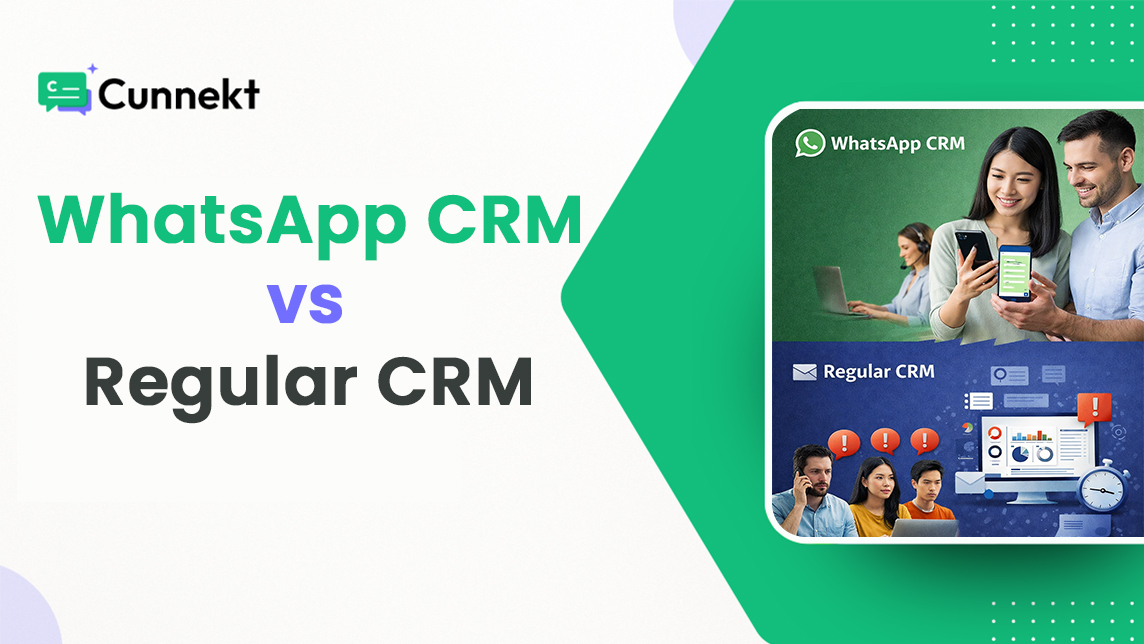
Walk into any mid-sized sales office in Pune, Jaipur, or Hyderabad right now. Ask the sales manager where their leads are tracked. Nine out of ten times, the answer involves a mix of WhatsApp personal numbers, a half-used Zoho or HubSpot account, and a few spreadsheets someone made six months ago and never updated.
That’s not a tech problem. That’s a process problem that no regular CRM has figured out how to solve for the Indian market specifically.
Here’s the reality: Indian buyers live on WhatsApp. They don’t fill in enquiry forms the way Western buyers do. They don’t reply to cold emails. They do, however, respond to a WhatsApp message at 9 PM on a Sunday within minutes. The sales conversation in India starts and ends on WhatsApp, but the CRM your team is using was built assuming it starts with an email or a cold call.
That gap is where most Indian sales teams are bleeding leads every single day.
What a Regular CRM Does?
HubSpot, Salesforce, Zoho, and Freshsales are solid tools built primarily for pipeline visibility. You log a call, update a deal stage, and set a follow-up reminder. The whole system assumes your sales rep is working a structured outbound motion. Email sequences, call logs, meeting notes.
For a US or European sales team selling SaaS or enterprise software, that workflow makes sense. The buyer expects formal communication. There’s a structured decision process.
But here’s what happens when an Indian real estate sales rep uses Salesforce: the lead comes in via a Facebook ad, the prospect sends a WhatsApp message from their personal number, the rep replies from their own phone, has a full conversation, and then manually logs a summary into the CRM two days later, if at all. The CRM has a record. The actual conversation is sitting on the rep’s personal phone, completely invisible to the manager.
If the rep leaves, that conversation history is gone. The relationship, the context, everything. That’s the core problem regular CRMs don’t solve for India.
Why WhatsApp CRM Is a Different Category?
A WhatsApp CRM is not just a regular CRM with a WhatsApp plugin bolted on. The fundamental difference is where the conversation happens and whether the system captures it.
In a proper WhatsApp CRM setup, every lead that messages your business number gets automatically logged. The conversation is tied to a contact, a deal stage, and an owner. When the lead says, “I’m interested in the 2BHK in Sector 45,” that message is stored in the system, not on someone’s phone.
The sales rep can respond from the CRM interface itself. No switching apps. No copy-pasting. The manager can see the full conversation without asking the rep for a summary.
This matters a lot in India for a specific reason: sales team turnover is high. When a rep leaves a real estate company in Noida or an EdTech firm in Bengaluru, they take their WhatsApp conversations with them. A WhatsApp CRM removes that dependency entirely. The company owns the conversation history, not the individual.
The Lead Leakage Problem Indian Teams Ignore
Most sales managers in India know their conversion rates are low. What they don’t know is exactly where leads are dropping off, because the actual data is scattered across personal phones.
In a regular CRM, you can see pipeline drop-off at each stage. But if 40% of your conversations never made it into the CRM because the rep was replying from WhatsApp personally, your pipeline data is wrong from the start. You’re making decisions on incomplete information.
WhatsApp CRM tools fix this at the entry point. Lead comes in, gets logged automatically, gets assigned to a rep, and the clock starts ticking on response time. If no one replies in 10 minutes, the system flags it or auto-sends a message. Nothing falls through.
In India, where 60-75% of online shopping carts get abandoned, and where similar patterns play out in real estate inquiries, insurance, and EdTech admissions, that auto-response capability alone is significant.
What Indian Sales Teams Need From a CRM?
A few things that matter specifically for Indian sales contexts that most regular CRMs don’t handle well:
Multi-agent WhatsApp access on one number
A small team of five reps can’t each run their own WhatsApp number. Leads get confused, branded identity breaks down, and conversations are fragmented. A WhatsApp CRM lets multiple agents work from a single business number with clear ownership of each conversation.
Broadcast plus follow-up in one place
Indian sales teams frequently need to send a promotional message to 500 contacts and then track who replied, who didn’t, and follow up accordingly. Regular CRMs have no broadcast capability. WhatsApp CRMs do.
Conversation context before the call
When a rep finally calls a lead, they should know what that person already asked on WhatsApp, what product they showed interest in, and how long they’ve been in the pipeline. Regular CRMs only show this if the rep updated the record manually, which most don’t consistently do.
Lead scoring based on WhatsApp activity
If a lead opens your catalog, clicks a button, and asks two questions, that’s a warm lead. A WhatsApp CRM can score and prioritize based on actual engagement behavior, not just form fills.
Where Regular CRMs Still Make Sense?
If you’re running a B2B software company selling to enterprise clients in India with long sales cycles, formal procurement processes, and structured email-heavy communication, a regular CRM like HubSpot or Salesforce still makes sense.
These tools are built for dealing with complexity. Multiple stakeholders, contract stages, and revenue forecasting. WhatsApp is rarely the primary channel in that context.
The problem is that most Indian businesses are not in that category. They’re selling to consumers or small businesses where WhatsApp is the first and often only communication channel. Trying to force a regular CRM onto that workflow creates more friction than it removes.
The Practical Reality
The CRM market globally is valued at $97.6 billion in 2026, and WhatsApp Business API adoption is expected to reach 85% of large enterprises. But large enterprises are not where this conversation is most urgent. The more pressing reality is the lakhs of Indian SMBs in real estate, EdTech, travel, insurance, and services still tracking leads in WhatsApp threads and Excel sheets.
A WhatsApp CRM is not a premium upgrade for those businesses. It’s the baseline infrastructure they should have had from day one. The cost of a missed lead in India, depending on the industry, runs between ₹5,000 and ₹50,000 per opportunity. The monthly cost of a WhatsApp CRM is a fraction of one recovered lead.
The question for Indian sales teams isn’t whether to use WhatsApp CRM. The question is how long they’re willing to keep losing deals that are happening on their reps’ personal phones, completely invisible to anyone managing the pipeline.
Categories
About the Writer

Sumant Singh
Related Articles
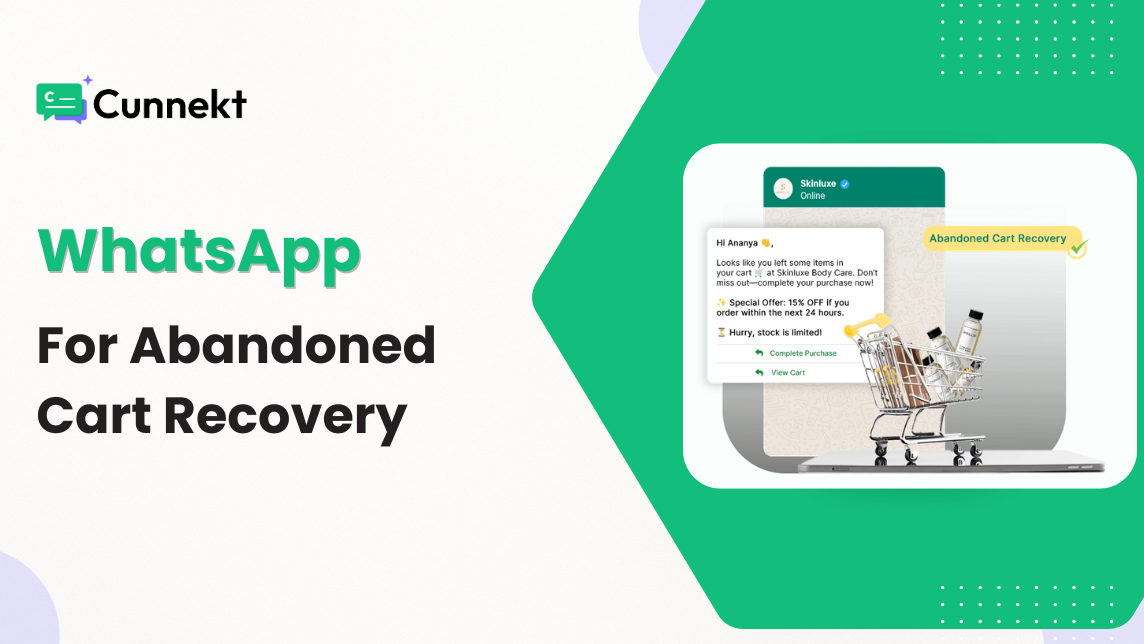
How D2C Brands Recover Abandoned Carts on WhatsApp?
A skincare brand in Bangalore was running solid Meta ads. Good creative, decent ROAS, heal
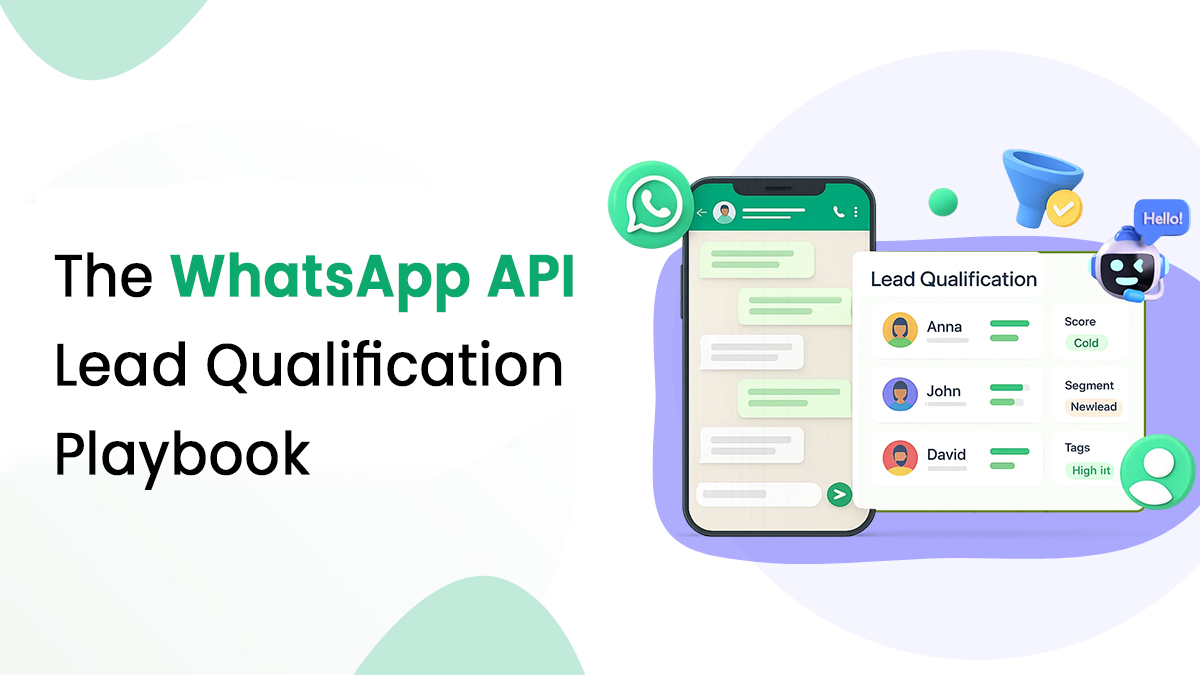
The WhatsApp API Lead Qualification Playbook Every Sales Team Needs
Sales teams running on WhatsApp Business API have a common problem: the messages keep comi
Top 5 Benefits of WhatsApp Business API for SMBs
Your customers are already on WhatsApp, texting friends, sharing photos, living their live
WhatsApp vs. WhatsApp Business App vs. WhatsApp Business API: Choosing the Right Platform For Your Business
In a globalized world, an organization’s communication with its customers has never


