How D2C Brands Recover Abandoned Carts on WhatsApp?
-
 Sumant Singh
 March 12, 2026
 Sumant Singh
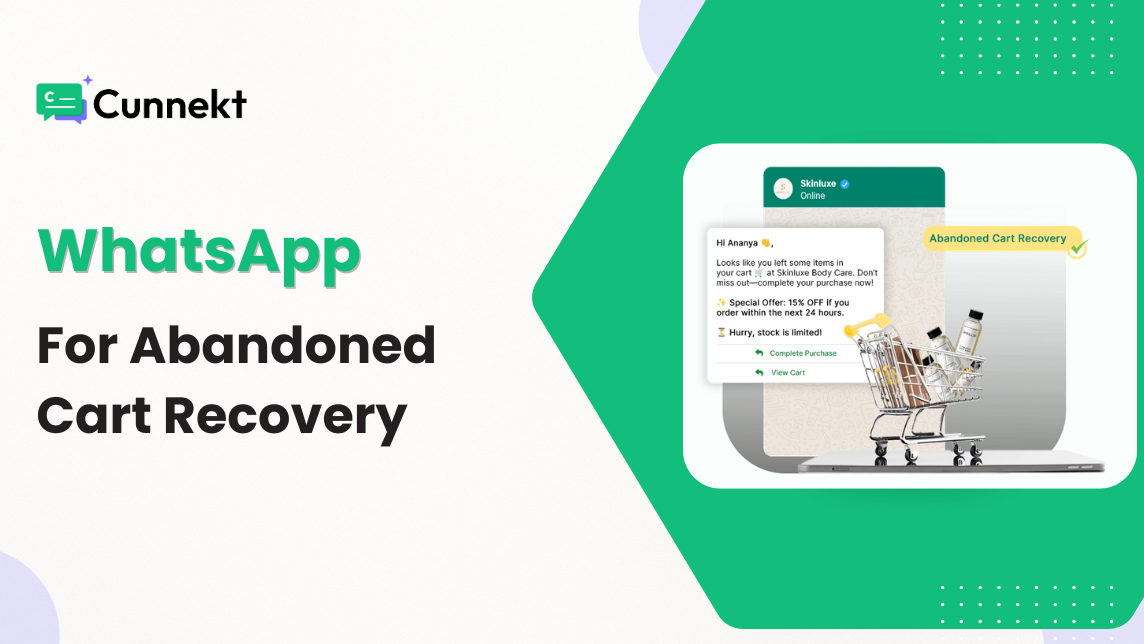
A skincare brand in Bangalore was running solid Meta ads. Good creative, decent ROAS, healthy traffic to their Shopify store. But 74% of people who added products to their cart were leaving without buying. Their email recovery sequence had a 6% open rate. SMS felt spammy. They had tried everything the standard playbook recommends.
Then they connected WhatsApp to their cart abandonment flow. Within 30 days, the recovery rate jumped from 4% to 19%. Same products. Same price. Same customers. Just a different channel reaching them at the right moment.
That story is not unusual anymore. Across D2C brands in India, WhatsApp abandoned cart recovery is now a standard part of the revenue stack. Not experimental. Not optional. Standard.
Here is exactly how it works, what the setups look like, and where most brands still get it wrong.
Why Email Stopped Working for Cart Recovery?
Email recovery was the default for years. Set up a three-part sequence, wait 1 hour, 24 hours, 72 hours, and watch the conversions trickle in. It worked reasonably well in 2018 and 2019.
It does not work the same way in 2026.
Average email open rates for D2C cart recovery sit between 5% and 8% in India. Promotional tab filtering, inbox fatigue, and the sheer volume of marketing emails mean your carefully written subject line never gets seen. The customer who left their cart is not ignoring you. They just never saw the message.
WhatsApp open rates run at 98%. That is not a marketing claim. It is what happens when a message lands in the same app where someone talks to their family. People check WhatsApp. They do not check promotional email tabs.
The second issue is timing. WhatsApp abandoned cart recovery depends on speed. A customer who left your store 6 minutes ago is still in buying mode. One who left 14 hours ago has moved on mentally. Email sequences are slow by nature. WhatsApp messages land in under a second.
What a Working WhatsApp Cart Recovery Flow Looks Like?
Most brands that are doing this well have a three-message sequence. Not five. Not one. Three, spaced deliberately.
Message 1 — 30 minutes after abandonment
This message does not push hard. It reminds. The tone is helpful, not desperate. Something like:
Hi (CUSTOMER NAME), you left something behind. 👀
Your cart at [Brand Name]:
- Rose Hip Face Serum (30ml) — ₹849
- Vitamin C Moisturiser — ₹699
Your cart is saved. Pick up where you left off:
[Cart Link]
No discount yet. No urgency. Just a clean, personal reminder with the exact products listed. Listing the actual items matters — it makes the message feel like it came from a person who noticed, not an automated system.
Message 2 — 24 hours after abandonment
If no purchase, this message adds a soft reason to act. Not a panic discount — a genuine nudge.
Hi (CUSTOMER NAME), just checking in.
Your Rose Hip Serum is still waiting. It’s one of our top sellers and stock runs low on weekends.
Still interested? Your cart is here:
[Cart Link]
Reply HELP if you have any questions about the product.
The stock note works when it is true. Do not use fake scarcity. Customers notice, and it damages trust permanently. The reply trigger (HELP) opens a support conversation that a chatbot or agent can handle.
Message 3 — 48 hours after abandonment
This is the offer message, sent only to people who opened Message 1 or 2 but still did not buy. Sending a discount to everyone from Message 1 trains customers to abandon carts on purpose, waiting for the coupon.
Hi (CUSTOMER NAME), last one from us.
We want you to try it. Use code PRIYA10 at checkout for 10% off your cart.
Valid for 24 hours.
[Cart Link]
Personalised discount code. Hard expiry. Clean. This sequence, done right, consistently recovers 15 to 25% of abandoned carts for D2C brands using it on WhatsApp.
The Technical Setup Behind It
This is where most brands stumble. WhatsApp abandoned cart recovery is not a plugin you install in five minutes. It requires the WhatsApp Business API, a BSP (Business Solution Provider) like Cunnekt, and a clean integration with your ecommerce platform.
Here is the basic data flow:
- Customer adds to cart and enters their phone number at checkout (or is an existing customer)
- Cart abandonment event fires in Shopify or WooCommerce after 20 to 30 minutes of inactivity
- The webhook triggers a flow in your WhatsApp automation platform
- The platform pulls cart contents such as product names, images, prices and then populates the template variables
- Message 1 goes out via WhatsApp Business API
The phone number capture step is the most common gap. D2C brands often collect email at checkout but not phone number. Or they collect it but it is not linked to WhatsApp opt-in consent. Under WhatsApp’s policy, you can only send template messages to users who have opted in.
Getting this right means adding a WhatsApp opt-in checkbox at checkout, on the product page, or at account creation. Brands that have done this properly — building a WhatsApp subscriber list the same way they built an email list — see significantly higher eligible audience sizes for recovery flows.
What Separates High-Recovery Brands From Low-Recovery Brands?
After working with multiple D2C setups on the WhatsApp Business API, the difference between brands recovering 5% and those recovering 20%+ comes down to four things.
Product images in the message
WhatsApp supports rich media templates. Sending the actual product image alongside the cart reminder outperforms plain text by a significant margin. Customers see the product they were looking at. Visual recall drives action. Plain text feels generic.
Segment before you send
Not all abandoned carts are the same. A first-time visitor who left after viewing one product is very different from a returning customer who has bought twice and left a ₹3,200 cart. Treating them the same way wastes discount budget and creates poor experiences.
Brands doing this well segment on at least two dimensions: cart value (high value gets a faster, more personal follow-up) and customer history (returning customers get loyalty-framed messaging, new visitors get trust-building messaging).
Two-way conversation, not broadcast
The brands with the highest recovery rates are not just sending messages. They have live chat or chatbot fallback built into the flow. When someone replies “Is this fragrance-free?” at 11pm, the chatbot answers instantly from the product FAQ. That answer is often what converts the sale.
WhatsApp abandoned cart recovery that treats the channel as one-way broadcast misses the biggest advantage of the platform. It is a conversation channel. Build it like one.
Timing precision
The 30-minute trigger works better than 1-hour in almost every test. The customer is still near their phone. The intent is still warm. Waiting an hour costs conversions. Some brands have tested 15-minute triggers and seen even higher recovery, though it risks feeling intrusive for some audiences. Test your own window.
The Compliance Side Nobody Talks About
WhatsApp cart recovery is not a free-for-all. Meta has specific rules that, if violated, get your WhatsApp Business number flagged or banned. This happens to brands that rush the setup without understanding the policy.
Three rules that matter here:
Opt-in is mandatory:
You cannot send cart recovery messages to someone who has not explicitly opted in to receive WhatsApp messages from your brand. Buying a contact list and blasting cart reminders is against policy and will get your number quality rating dropped fast.
Template approval is required:
Every message template in your cart recovery sequence must be approved by Meta before it can be sent. This takes anywhere from 30 minutes to 24 hours. Build your template library before you need it, not during a sale weekend.
Message frequency matters:
Sending more than three recovery messages is likely to generate complaints. High complaint rates reduce your phone number quality rating, which limits how many messages you can send per day. Three messages is the practical ceiling.
Real Numbers From Real Brands
These are outcomes from WhatsApp cart recovery setups running through the Business API in 2025 and 2026:
- A Pune-based supplement brand: cart recovery rate increased from 3.8% to 17.2% after switching from email to WhatsApp with a three-message sequence
- A Delhi apparel brand: 22% of recovered carts came from customers who replied to Message 2, asking a product question, which was then answered by a chatbot
- A Mumbai home decor store: average recovery value was 40% higher on WhatsApp than email, because WhatsApp lends itself to higher-ticket conversations
The pattern is consistent. WhatsApp outperforms email on recovery rate, response rate, and average order value from recovered carts. The channel is better suited to the task.
Where Most Brands Still Get WhatsApp Abandoned Cart Recovery Wrong?
The setup fails most often at three points.
Weak opt-in collection:
Brands put the WhatsApp opt-in checkbox at the bottom of a long checkout form with small text. Opt-in rates stay under 20%.
Simple fix: make it prominent, explain the value (“Get order updates and exclusive offers on WhatsApp”), and watch opt-in rates climb to 60 to 70%.
Using broadcast-only tools:
Some platforms let you send WhatsApp messages but do not support two-way conversation. Your recovery message goes out, a customer replies, and the reply goes nowhere. This actively damages your brand relationship. Use a platform that handles the full conversation loop.
No link between discount and behaviour:
Sending a discount on Message 1 to everyone who abandoned a cart is a common mistake. It trains cart abandonment as a strategy. Customers learn to add to cart, leave, and wait for the coupon. Reserve discounts for Message 3, and only send Message 3 to those who engaged with the first two messages without converting.
Cart abandonment is a solved problem for brands that set this up correctly. The technology is accessible, the platform is where customers already are, and the results are consistent enough that there is no good reason to still be relying on a 6% email open rate to do recovery work.
Conclusion:
WhatsApp abandoned cart recovery isn’t magic. It’s a channel with genuinely high engagement that most D2C brands are still using poorly. The ones that get the setup right are compounding that advantage because their customers start to trust WhatsApp as the primary communication thread with the brand, which makes every future message, including product launches, restocks, and loyalty rewards, land better too.
Categories
About the Writer

Sumant Singh
Related Articles
WhatsApp CRM vs Regular CRM: Why Indian Sales Teams Are Switching
Walk into any mid-sized sales office in Pune, Jaipur, or Hyderabad right now. Ask the sale
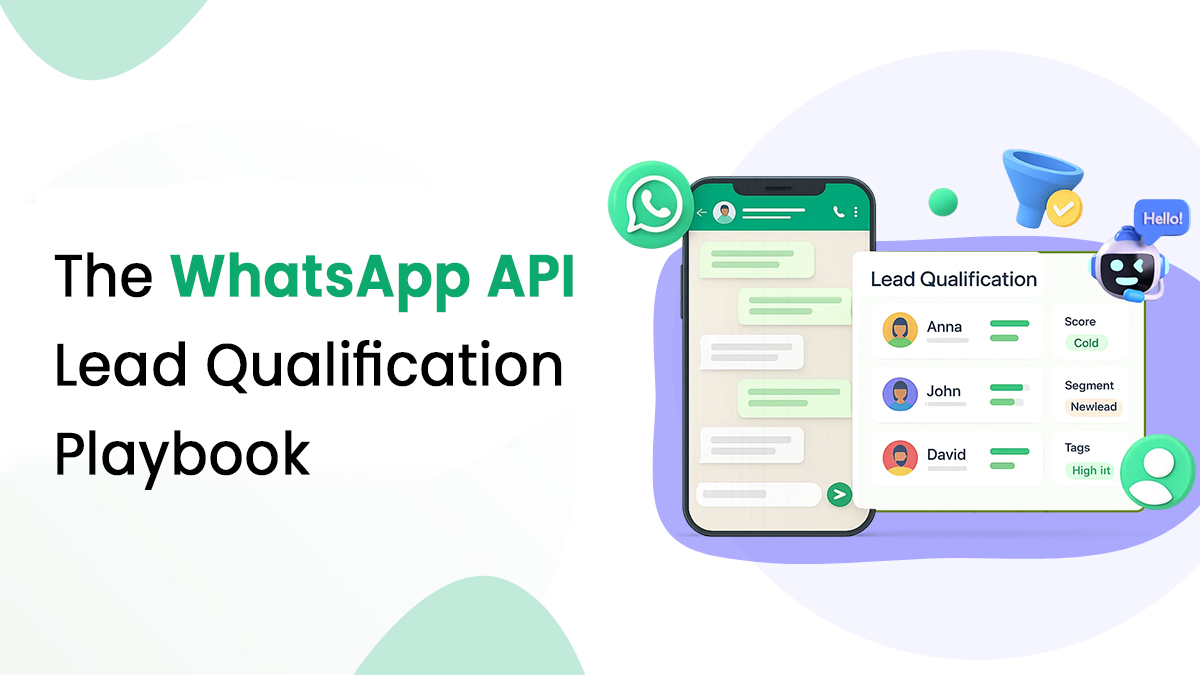
The WhatsApp API Lead Qualification Playbook Every Sales Team Needs
Sales teams running on WhatsApp Business API have a common problem: the messages keep comi
Top 5 Benefits of WhatsApp Business API for SMBs
Your customers are already on WhatsApp, texting friends, sharing photos, living their live
WhatsApp vs. WhatsApp Business App vs. WhatsApp Business API: Choosing the Right Platform For Your Business
In a globalized world, an organization’s communication with its customers has never


